Property Empire Happiness, Stress, and Energy
Treat the three-stat triangle as your weekly budget: spend Energy, contain Stress, protect Happiness.
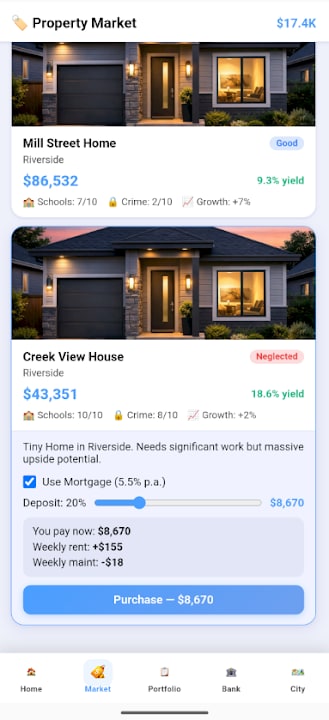
Happiness, Stress, and Energy are the operating system of Property Empire. Cash and property values look like the scoreboard, but these three stats decide whether you can finish a renovation, keep a tenant through a rent raise, or survive a mortgage week without fire-selling a unit you meant to hold. This guide explains how the triangle works on the weekly turn loop, how each district and play style pulls the stats differently, and how to schedule recovery weeks before you unlock Greenfield Suburbs, Campus Quarter, or Port Industrial.
Property Empire is a turn-based weekly property tycoon on Android by Gaige (Gaige Tirawhiti Fairest), free with ads, Full Game v1.0 from June 8, 2026. It is single-player only—no partner will calm your tenants or pay your interest. If you are still learning the map, pair this page with Getting Started and the Guides Hub.
The three-stat triangle
Think of the stats as corners of one constraint, not three separate meters you max independently.
- Energy is your action budget for the week: inspections, structural repairs, cosmetic polish, tenant conversations, deal hunting, and travel between listings. Empty Energy means the week ends with unfinished work even if cash is fine.
- Stress rises when debt service bites, vacancies linger, conditions stay Poor or Neglected too long, or Happiness crises stack. High Stress shrinks how much of your remaining Energy you can usefully spend—you start missing soft problems until they become expensive hard problems.
- Happiness tracks tenant satisfaction and feeds renewals, reputation, and the climb from Small Landlord toward citywide tycoon. Crashed Happiness creates vacancies; vacancies cut yield; cut yield makes mortgages feel heavier; heavier mortgages raise Stress.
A healthy week moves all three in the same direction: spend Energy on the bottleneck that protects Happiness or reduces future Stress, then leave a little spare capacity. A reckless week spends Energy on a speculative flip while a mortgaged rental quietly tips into vacancy.
Weekly Energy allocation
Before you tap renovate or bid, list the week’s non-negotiables:
- Any repair that unlocks rent on a unit already carrying a mortgage.
- Tenant issues that threaten renewal this cycle.
- Inspections that reveal whether a Poor or Neglected listing is a bargain or a trap.
- Optional flips, cosmetic upgrades, and district window-shopping.
Fund 1–3 first. Optional work only gets leftover Energy. That order alone prevents most early bankruptcies in Riverside. Deep renovation sequencing lives on Flip & Renovate; payment sizing lives on Mortgages & Loans and Mortgage Planner Tips.
Campus Quarter and busy Port Industrial weeks tempt you to chase every listing. Resist. Energy spent on a second industrial shell while a Campus lease is fraying is Energy you cannot spend on a five-minute Happiness save that preserves a month of rent.
Stress from mortgages and vacancies
Debt is the most common Stress amplifier. Interest is visible; Stress is the multiplier. When weekly payments consume most of your rent roll, every surprise—a delayed flip buyer, a seasonal Campus empty, a crime-adjacent Port Industrial hiccup—pushes Stress up. High Stress then makes renovations feel slower and tenant triage feel harder, which is how one leveraged Neglected buy becomes a two-week spiral.
Vacancies are the second amplifier. An empty unit still wants upkeep attention and still owes the bank. Happiness cannot recover on a vacant door; you must either fill it at a fair rent or exit. Read Tenants & Rent for raise timing and concession tactics that trade a little cash for a lot of Stability.
If Stress stays elevated on quiet weeks, you are overborrowed or overextended across districts. Shrink the portfolio: finish the cheapest path to a marketable or rentable state, sell or stabilize, clear the loudest payment, then rebuild. Reputation ranks reward solvent weeks more than flashy empty maps—see Landlord Reputation Ranks.
Happiness for renewals and reputation
Happiness is not a soft RP meter. It is how Property Empire decides whether rent continues. Fair renovations, responsive fixes, and measured rent raises keep units above crisis. Greedy raises right after a sloppy cure of Poor condition often cost more than the raise earned.
Reputation climbs when tenants renew, projects complete, and books stay clean. Chasing vanity listings while Happiness bleeds stalls the ladder from Small Landlord to citywide tycoon. Treat one stable renewal as progress equal to a flashy flip headline.
District flavor matters:
- Riverside — Working-class patience; small concessions go far; learn Happiness habits here.
- Greenfield Suburbs — Families care about condition and school-adjacent comfort; neglected yards and delayed repairs hurt faster.
- Campus Quarter — High demand helps fills, but turnover and exam-season mood swings punish ignored maintenance.
- Port Industrial — Commercial and industrial tenants care about function and safety signals; crime and growth metrics interact with how stressful management feels.
Recovery weeks
Schedule deliberate quiet weeks before you need them. A recovery week means: collect rent, skip new leverage, finish only critical repairs, and optionally offer a small Happiness gesture on a good tenant. The goal is Stress trending down and Energy returning to a full bar for the next push.
Use recovery weeks after:
- Closing a heavy flip that emptied the Energy bar.
- Signing a new mortgage.
- A vacancy longer than one rent tick.
- Unlocking a new district when the map suddenly offers too many shiny Poor deals.
New players often treat every week as a growth week. Property Empire’s weekly structure rewards landlords who alternate push and consolidate. That rhythm is what lets you reach Greenfield and beyond without carrying Riverside-level Stress into Greenfield-sized prices.
Practical decision checklist
At the start of each week, ask:
- What is my Stress trend versus last week?
- Which single Energy spend most protects Happiness or mortgage coverage?
- Am I about to buy something that needs two weeks of Energy I do not have?
- Would a recovery week raise next week’s net worth more than another bid?
If Stress is high and Happiness is slipping, the answer is almost never “open Port Industrial.” Fix the triangle first, then expand.
Tie-ins across the wiki
- Systems onboarding: Getting Started
- Debt and Stress: Mortgages & Loans, Mortgage Planner Tips
- People and renewals: Tenants & Rent
- Energy sinks that pay: Flip & Renovate
- Long climb: Landlord Reputation Ranks
- Index: Guides Hub
Support remains potatoface995@gmail.com via the store listing and privacy policy on the developer site. No confirmed promo codes change the triangle—skills do. Keep Happiness visible on every hold, leave Energy for emergencies, and treat Stress as a hard budget, not a mood. That is how weekly tycoons stay solvent from Riverside to a citywide portfolio.
Frequently Asked Questions
Quick answers to the most common questions.
Which stat should I prioritize if all three look bad?
Protect Happiness on mortgaged rentals first, then cut Stress by pausing new buys, then rebuild Energy with a recovery week.
Does Stress only come from mortgages?
No. Vacancies, lingering Poor or Neglected conditions, and stacked tenant crises also raise Stress—debt just amplifies them.
When should I take a recovery week?
After a heavy flip, a new loan, a multi-week vacancy, or a district unlock that flooded you with tempting listings.
How does Happiness affect landlord ranks?
Stable renewals and clean management feed reputation from Small Landlord upward; chronic Happiness crashes slow the climb to citywide tycoon.
Is Energy shared across districts?
Yes—your weekly Energy bar is global. Spreading unfinished projects across Riverside and Port Industrial is a common overextension mistake.