Property Empire Flip & Renovate Guide
Turn Poor and Neglected properties into profit without burning Energy and Stress.
Flipping and renovating sit at the heart of Property Empire’s weekly loop. You hunt undervalued stock—especially units labeled Poor or Neglected—spend Energy on the right repairs, then either sell into appreciation or hold for stronger rental yield. Done well, flips fund district unlocks and push reputation past Small Landlord. Done poorly, they strand mortgages on half-finished shells while Stress climbs.
Read the condition labels
Poor and Neglected are not flavor text. They signal discount entry points with heavier cure costs. Inspect before bidding: structural issues, systems, and livability problems should be listed against your Energy bar and cash. Cosmetic-only distress can be a bargain; structural distress on a thin Energy week is a trap.
Always compare the as-is price plus cure cost to nearby renovated comps in the same district. Riverside teaches this cleanly. Greenfield Suburbs may pay more for family-ready finishes. Campus Quarter buyers and renters tolerate different standards than Port Industrial commercial users. Context: Districts & City Map.
Energy budgeting for renovations
Energy is the real renovation currency. Sketch a multi-week plan:
- Week A — Safety and systems that unlock legal rent or sale.
- Week B — Livability upgrades that lift Happiness or sale price.
- Week C — Optional cosmetics if appreciation math still works.
If a plan needs overtime every week, expect Stress spikes. High Stress makes the next flip sloppier. Leave slack Energy for tenant emergencies if you still have active rentals—see Tenants & Rent.
Flip exit versus hold decision
Sell (flip) when:
- Renovation lifted value above total basis (price + repairs + interest + time).
- You need cash to kill a painful loan or fund a better district entry.
- Local appreciation looks cresting and your Energy is better spent elsewhere.
Hold (rent) when:
- Rental yield after upkeep beats your alternative uses of cash.
- Happiness looks easy to maintain at a fair rent.
- You are climbing landlord reputation and want stable weeks on the books.
Hybrid exits work: rent one or two cycles to prove income, then sell to a buyer who values that trail.
Mortgages on flip projects
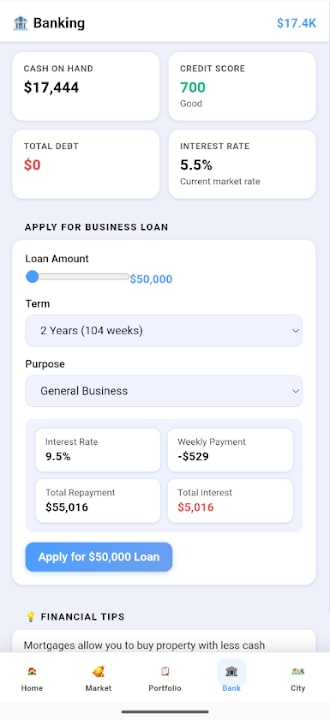
Short flips can still use mortgages, but interest during offline renovation weeks is part of basis. If debt service requires the sale to close on a fixed week, you have created a hard deadline—dangerous if a building sometimes fails to show as complete (player feedback noted around early builds; check Version History and retry after a week tick if needed). Prefer lighter leverage on speculative Neglected shells. Deep dive: Mortgages & Loans and Mortgage Planner Tips.
District flavors for flippers
- Riverside — Best training ground; working-class comps; forgive mistakes.
- Greenfield Suburbs — Pay attention to school ratings; family buyers reward solid renovations.
- Campus Quarter — High demand can speed rentals more than luxury flips; do not over-improve beyond student budgets unless selling to investors.
- Port Industrial — Commercial renovations follow growth and crime metrics; wrong finish level wastes Energy.
Ranked context: Best Properties and Best Districts.
Happiness during active renovations
If tenants remain in place, noisy or incomplete work tanks Happiness. Either relocate strategy (if the game offers vacancy-for-reno), stage work between leases, or budget concessions. A flip that creates a reputation hit can cost more than the extra sale price. Reputation ladder: Landlord Reputation Ranks.
Practical flip checklist
- Confirm district metrics: yield, appreciation, schools, crime, growth.
- Inspect condition; list must-fix versus nice-to-have.
- Price Energy weeks and cash, including mortgage carry.
- Set a walk-away total basis before bidding.
- Renovate in priority order; avoid cosmetic rabbit holes.
- Choose sell versus rent with yield math, not vibes.
- Log Stress at week end; adjust pace.
Common renovation mistakes
- Buying Neglected without a cure budget.
- Spending all Energy on paint while systems remain broken.
- Ignoring appreciation vs rent: some districts pay you more for holds.
- Starting a second flip while the first still burns overtime.
- Unlocking a new district mid-flip and splitting focus.
Tie-ins for new landlords
Beginners should complete Getting Started and stabilize one Riverside project before parallel flips. Watch the Codes Hub for future gifts that can fund materials, but do not stall learning while waiting. Browse the Guides Hub when finance or tenant systems block your exit.
Flipping in Property Empire is disciplined sequencing: discount entry, honest Energy math, Stress awareness, and a clear exit. Master that in Riverside and every later district becomes a variation—not a brand-new game.
Frequently Asked Questions
Quick answers to the most common questions.
Which conditions are best for flipping?
Poor and Neglected stock often prices in a discount. Buy only when you can fund and Energy-schedule the cure.
Should I always sell after renovating?
No. If rental yield and Happiness look strong, holding can beat a flip—especially while climbing reputation.
Why did my renovation not show as complete?
Some players report buildings occasionally not marking complete. Advance a week tick, retry, and check Version History notes; contact support if it persists.
How many flips should I run at once?
Early on, prefer one active heavy renovation so Energy and Stress stay controlled.
Do ads or codes change flip strategy?
Ads fund the free app; codes are not confirmed yet. Strategy should work without gifts.